
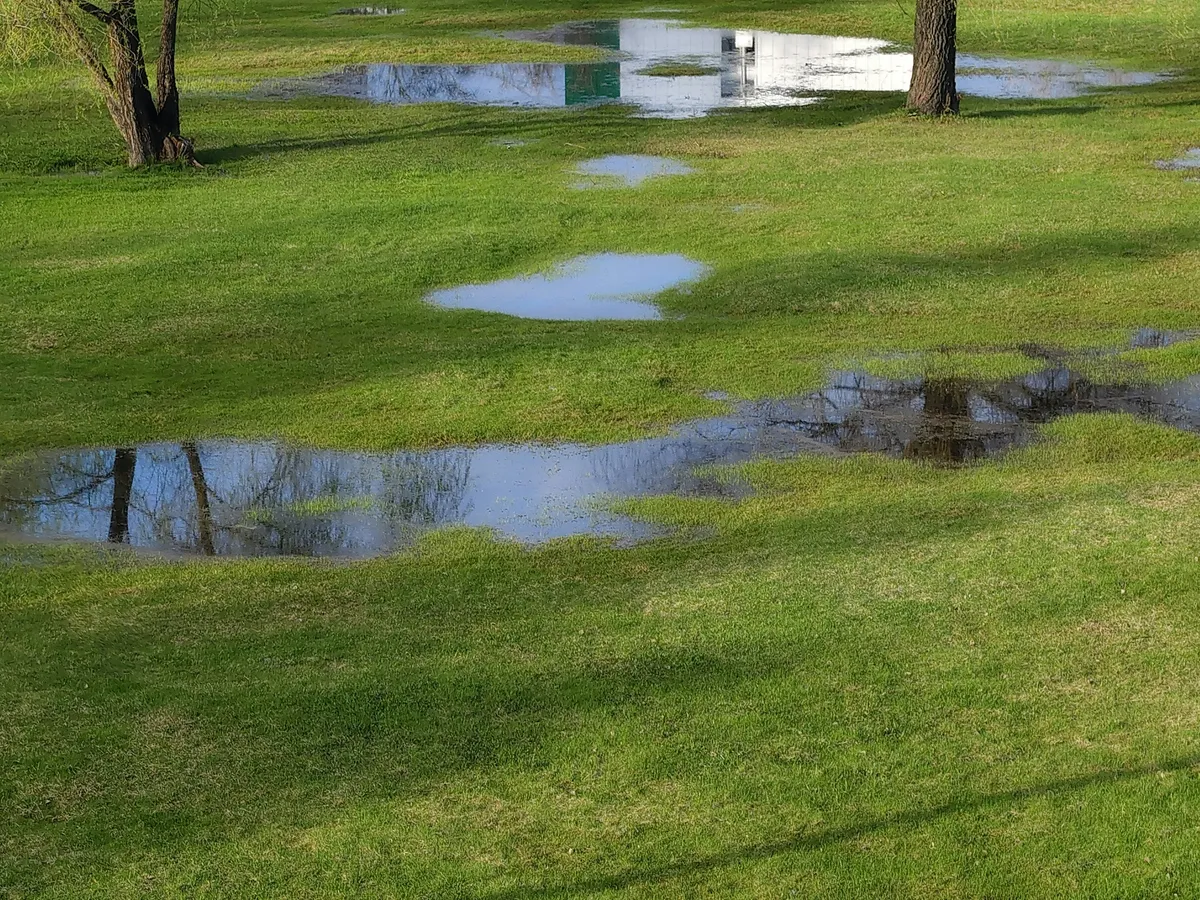
Why Does Water Pool in Your Yard After Rain?
Water can pool because rain reaches a low spot faster than it can drain away or soak into the soil. Compaction, soil conditions, runoff from roofs and paving, and changes in ground elevation can all contribute. A French drain or more topsoil is not automatically the right fix; the source and a suitable drainage destination need to be understood first.
For homeowners around Maple Valley, the useful starting point is a record of what happens during and after a storm. Two puddles that look similar may need very different solutions.
What clues help explain the problem?
Observe from a safe place without entering flooded areas. Note when the water appears, where it seems to arrive from, how large the wet area becomes, and how long it remains after rain ends. Take photos from the same position at different times so a contractor can understand the pattern.
Also record whether the issue started after a new patio, driveway, landscape project, or nearby construction. Look for overflowing gutters or visible surface runoff, but do not assume those are the only causes. Seattle Public Utilities identifies several types of drainage problems, including groundwater reaching the surface. Conditions need to be evaluated at the actual property.
Why can adding soil make matters worse?
Raising one low area changes where water can travel. Without understanding the surrounding elevations, that can move the problem toward a building, another part of the yard, or neighboring property. A thin layer of material also does not necessarily correct deeper compaction or poor infiltration.
WSU Extension explains that compaction can restrict drainage. Its stormwater resources also note that many infiltration approaches depend on well-draining soil. That is why an assessment should distinguish water moving across the ground from water that cannot move through it.
Do you need grading, a drain, or a rain garden?
The answer depends on the site. Grading addresses surface elevations and flow paths. A drainage system needs an appropriate collection area and destination. A rain garden relies on suitable soil, location, and design; it should not be assumed to work simply because a spot is already wet.
Ask the contractor to explain which condition the proposed approach addresses and what the limitations are. Confirm whether design review or permits are needed with the authority responsible for your property. Water should not simply be redirected onto a neighbor, sidewalk, or unapproved discharge point.
What should you bring to a drainage estimate?
Storm photos and a simple timeline showing how long water remains.
A sketch of buildings, paving, downspouts, wet areas, and property boundaries.
Records of past drainage work and where existing outlets are believed to go.
Details about access restrictions, fences, septic areas, or underground connections.
Your goal: protecting a structure, improving yard use, or preparing for a new project.
Ask the estimate to identify what will be assessed, what work is included, and what restoration follows excavation. Clarify whether soil evaluation, design, imported material, hauling, and landscape repair are included or separate. An installation plan should explain where water will go, not only where a trench will be dug.
Common homeowner questions
Will a French drain solve any wet yard?
No. The proposed system must fit the cause, elevations, soil, and suitable outlet. A drain installed without that assessment may leave the original problem unresolved.
Can I judge the site during dry weather?
A dry-weather visit can still be useful, but photos and observations from wet conditions help show problems that are not visible on the inspection day.
Is water beside the house something to postpone?
Water threatening the building deserves prompt assessment. Keep clear of flooded areas and electrical hazards, and contact an appropriate professional if water is entering the structure.
Discuss the whole property, not just the puddle
NW Supreme Construction offers excavation and site preparation. Request a project assessment or call (253) 653-8759 to discuss access, grading goals, and next steps.
Sources: WSU Rural Stormwater Solutions, WSU soils and fertilizers guide, and Seattle Public Utilities drainage issues. Reviewed October 31, 2026.
