
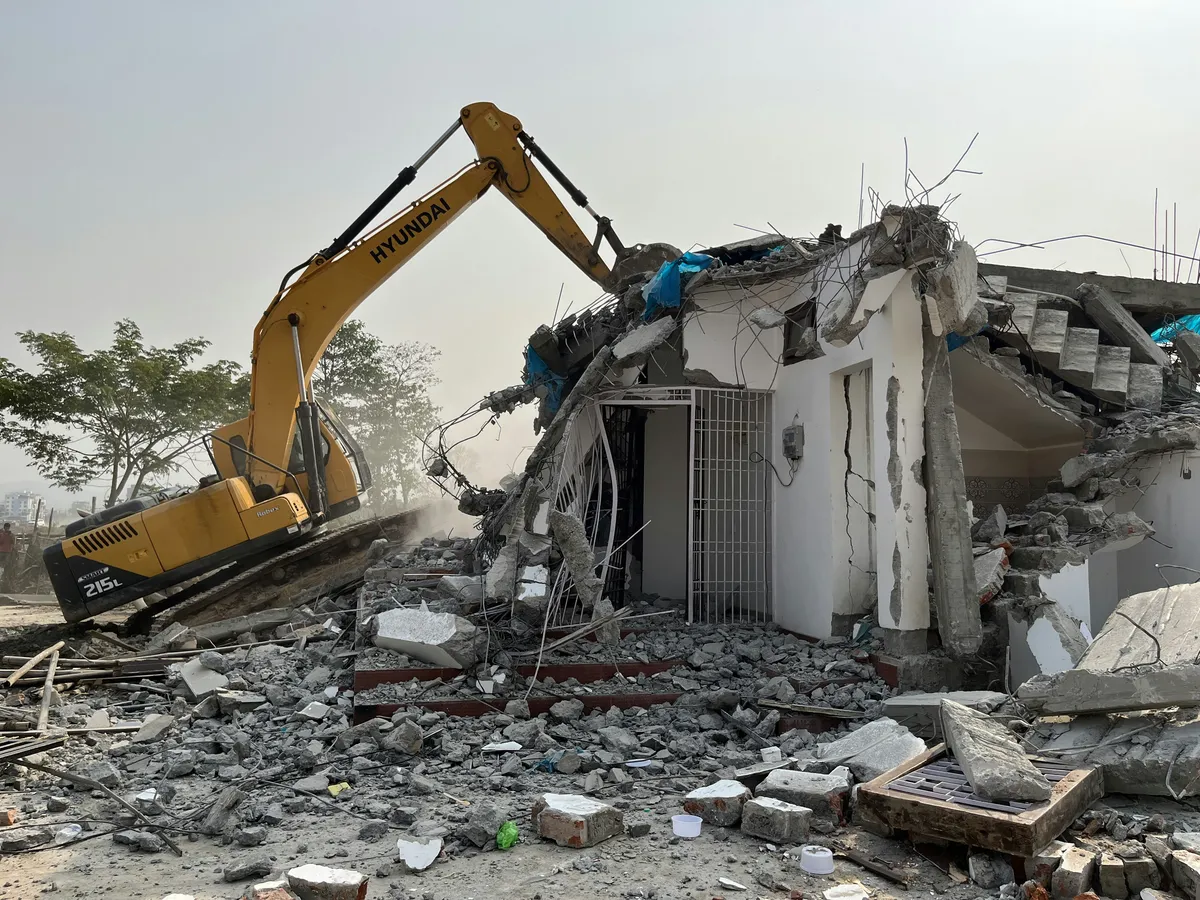
What Should You Arrange Before Demolishing a Garage or Small Building?
Before demolition, confirm the permit requirements, asbestos survey and notification responsibilities, utility disconnections, access, and the condition the site should be left in. Removing a garage or small building involves more than bringing in equipment. A clear plan helps prevent delays and makes competing estimates easier to compare.
For a Maple Valley project, begin with the property's actual jurisdiction and the applicable air-quality authority. Requirements can differ across the broader region, so a rule that applies in one county should not automatically be applied to another.
Does a small building still need asbestos planning?
Do not decide that from appearance or age alone. Puget Sound Clean Air Agency's demolition guidance calls for an asbestos survey by an AHERA-certified building inspector. The results must be shared with the demolition contractor and kept available at the site. Washington L&I also provides asbestos certification and survey guidance for construction work.
Ask which qualified party will arrange the survey and address any regulated material before the demolition schedule is finalized. This article is a planning checklist, not instructions for sampling or removing asbestos. Do not disturb suspected material to investigate it yourself.
Are building permits and air-quality notifications the same thing?
No. Ask the building department about the demolition permit and any associated site work. Separately, confirm the applicable asbestos/demolition notification, fees, and waiting period with the air-quality agency. Puget Sound Clean Air Agency's published guidance includes notification requirements even when no asbestos is found for covered demolition projects.
Keep the actual approvals and project conditions together. A contractor's planned start date is not a substitute for an approved schedule. If the scope changes, check whether the paperwork needs updating before proceeding.
Who handles utilities and site access?
List every service connected to the structure: electricity, gas, water, sewer, communications, and any private connections. Ask who coordinates with the relevant providers and qualified trades, who documents disconnections, and who verifies readiness before demolition. Do not assume that switching something off inside the building resolves every utility issue.
Equipment access also belongs in the estimate. Identify gates, narrow drives, overhead lines, neighboring buildings, and areas that must be protected. Discuss where trucks will load and how occupants, visitors, children, and pets will remain outside the work area.
What does “demolition complete” mean?
A building can be removed while significant work remains below or around it. Specify whether the project includes the slab, footings, buried debris, hauling, disposal documentation, backfill, grading, and surface restoration. State what will remain and what is excluded.
If another building, driveway, or landscaped space is planned, share that goal early. The next phase may need a particular subgrade, design, or inspection. A site cleared for access is not automatically ready for new construction.
What should be written into the estimate?
The exact structure and components to be removed.
Responsibility for surveys, permits, notifications, and utility coordination.
Material handling, disposal, and documentation included in the price.
Access protection, work boundaries, and cleanup expectations.
How unexpected buried materials or other changed conditions will be handled.
The final site condition and what must be completed before the next contractor starts.
Ask for unclear exclusions to be explained before accepting the bid. A realistic sequence is more helpful than a promised demolition day that ignores the preparation work.
Common questions
Does “no asbestos found” eliminate every notification?
Not necessarily. Confirm the rules for the structure and jurisdiction with the applicable agency; covered demolition notifications may still be required.
Is demolition the same as interior renovation?
No. Describe exactly what is being removed to the building department and air-quality agency so they can identify the applicable requirements.
Does NW Supreme's demolition price include abatement?
Do not assume it does. Any specialized hazardous-material work and the party responsible should be expressly identified in the scope.
Start with a coordinated scope
Review NW Supreme's demolition and site preparation services, then request an estimate or call (253) 653-8759.
Sources: Puget Sound Clean Air Agency homeowner demolition guidance, contractor demolition guidance, and Washington L&I asbestos certification. Reviewed October 31, 2026. Confirm current requirements for your project before scheduling work.
